A year of temple festivals in Tamil Nadu
Tamil temple towns run on their own calendar. From Pongal in January to the dawn songs of Margazhi, here is how the festival year unfolds, and how it changes what a visit feels like.
i
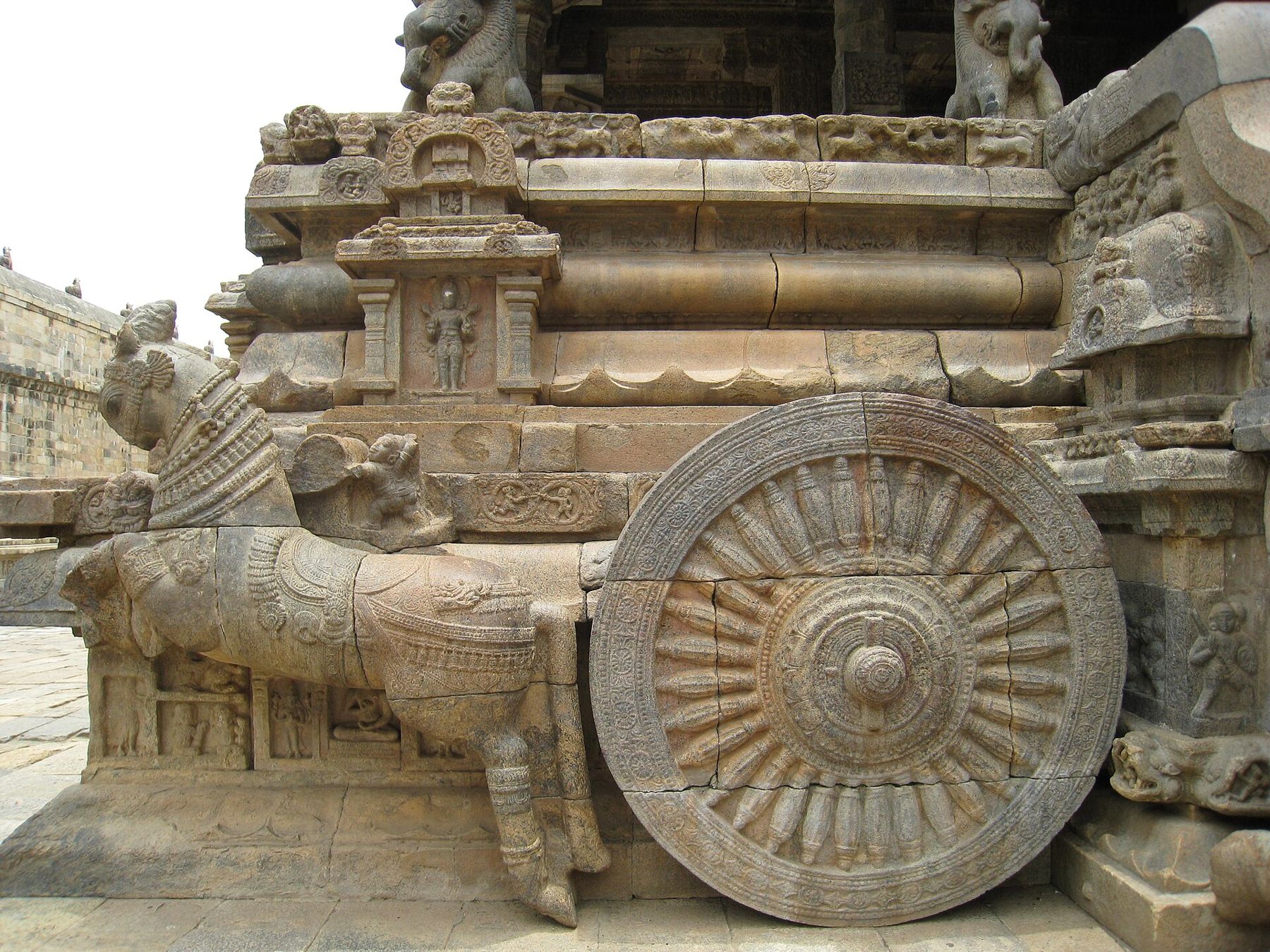
Nittavinoda · CC BY-SA 4.0A temple in Tamil Nadu is never quite the same two weeks running. Each has its own cycle of festivals, when the deities are dressed in special finery, carried through the streets on vehicles shaped like animals and birds, pulled in giant wooden cars, floated on tanks or married again in public ceremony. Many festivals follow the Tamil solar calendar, others the phases of the moon, so their dates move from year to year in the Western calendar. Check the dates for the year you travel; what follows is the general shape of the year.
January and February: Thai
Pongal is Tamil Nadu's harvest festival, held over several days in mid-January. Families cook the sweet rice dish that gives the festival its name in new pots until it boils over, a sign of plenty. Cattle are decorated and honoured on one of the days. Temples are busy, but Pongal is above all a home festival, and towns can be quiet as people return to their villages.
The float festival in Madurai, usually in late January or early February, takes the deities of the Meenakshi temple to the great Mariamman Teppakulam tank, where they are floated on a lit raft and drawn around the central island. Thaipusam, around the same time, is a major festival for Murugan, with large pilgrimages to his hill temples.
i
N. Vivekananthamoorthy · CC BY 4.0February and March: Shivaratri
Maha Shivaratri, the great night of Shiva, usually falls in February or early March. Devotees stay awake through the night in prayer, and the great Shiva temples, Thanjavur, Chidambaram, Rameswaram and many others, are open and crowded through the dark hours. At Chidambaram, a festival of classical dance is held in the temple around this time, with dancers from across India performing before the shrine of the dancing Shiva.
Panguni Uthiram, in March or April, celebrates divine marriages at many temples.
April and May: Chithirai
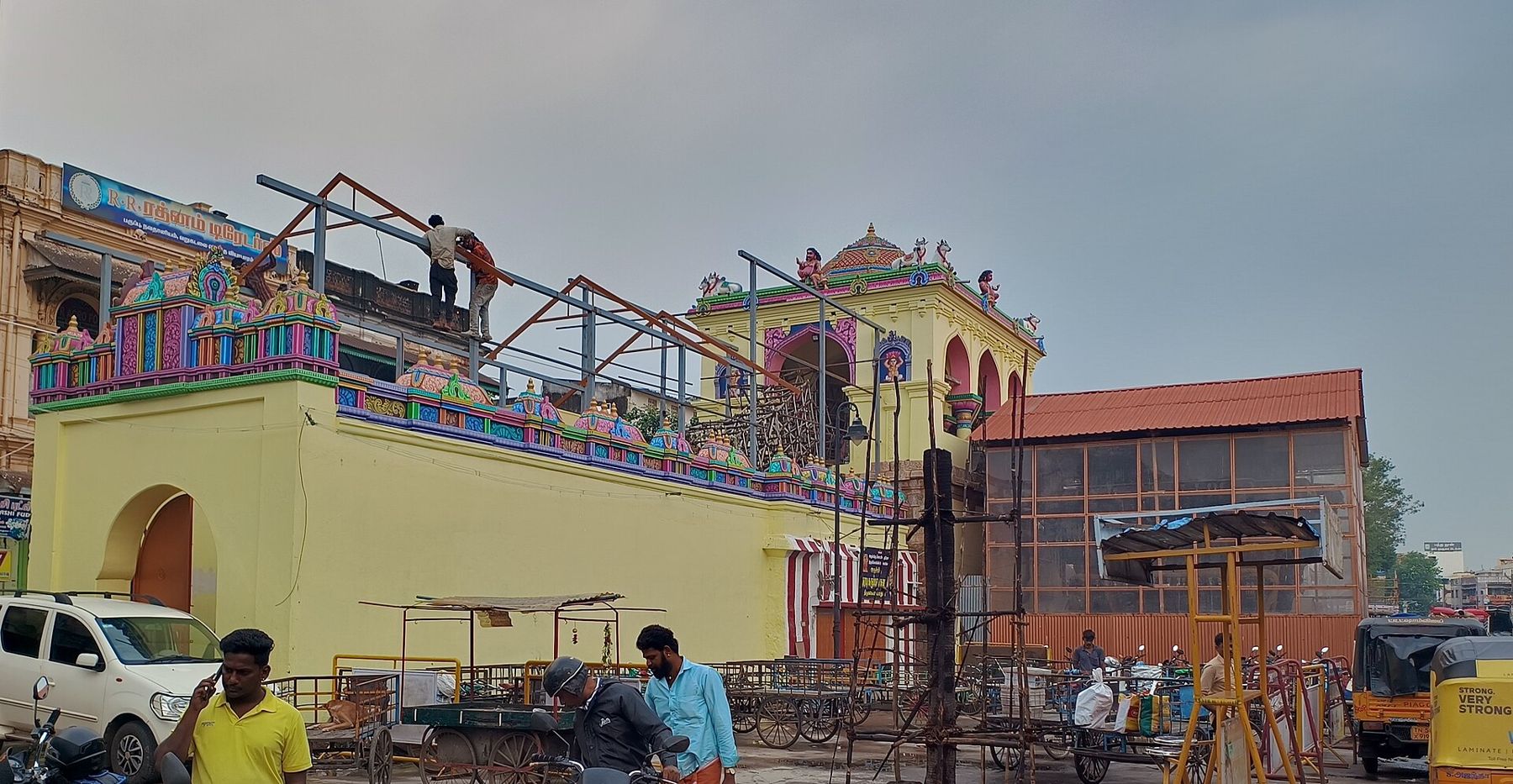
The Tamil new year falls in mid-April, at the start of the month of Chithirai. The month brings Madurai's Chithirai festival, the greatest of the city's year. Over about two weeks it celebrates the coronation of Meenakshi and her wedding to Sundareswarar, followed by the pulling of the temple cars around the Masi streets. At the same time, the deity Kallazhagar comes from his hill temple outside the city and enters the Vaigai river before huge crowds. It is spectacular, intensely crowded and very hot.
i
N. Vivekananthamoorthy · CC BY 4.0The temple cars
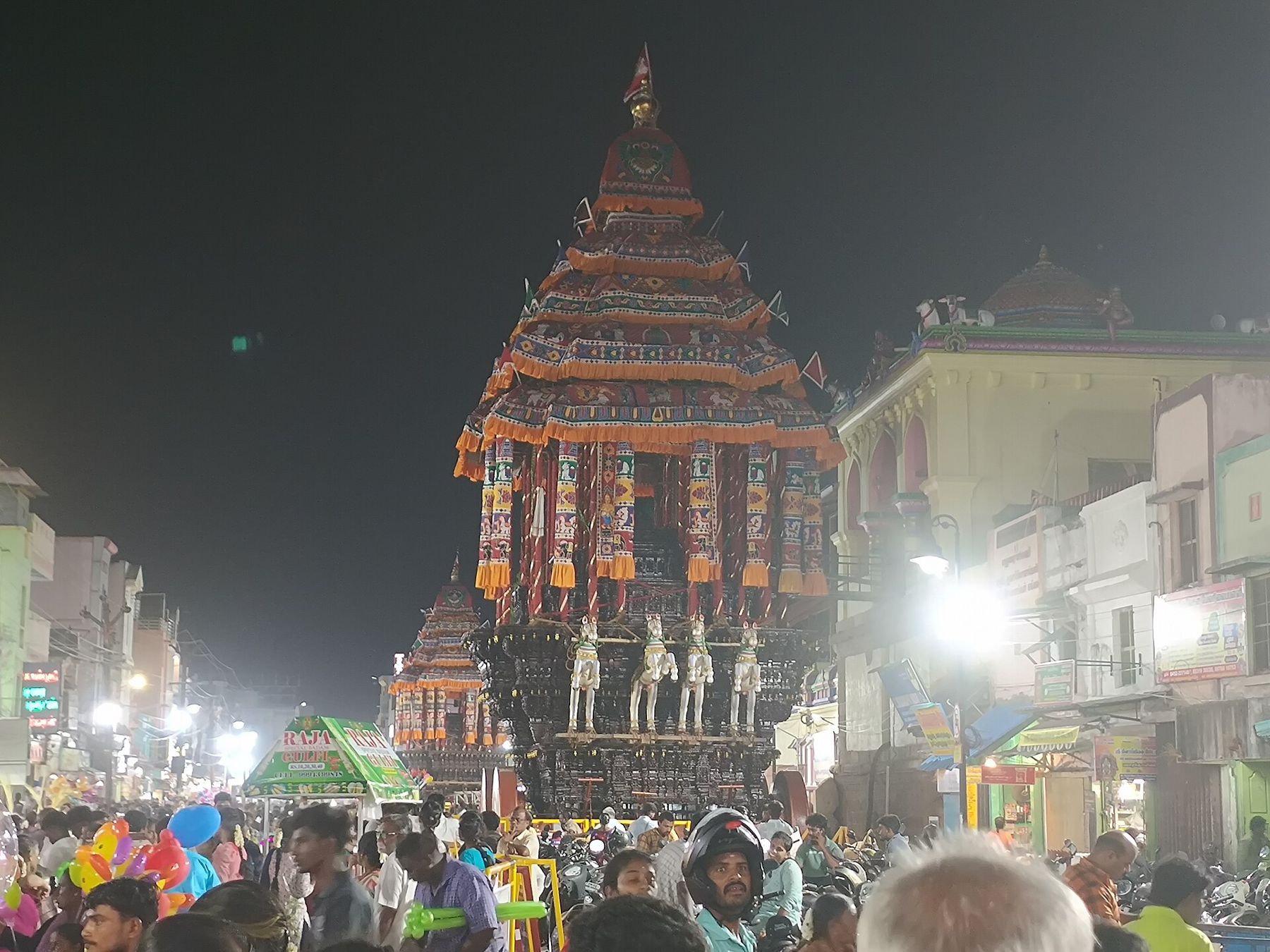
Car festivals, called ther in Tamil, are held at many temples during their annual festivals. The cars are huge wooden structures on solid wheels, carved with gods and stories and decorated with cloth and flowers for the day. The deity is placed inside, and thousands of people pull on thick ropes to haul the car slowly around the streets that circle the temple. Getting a car moving, and stopping it at the corners, takes skill and enormous effort. Watch from a safe distance and keep children well away from the wheels.
Car festivals, called ther in Tamil, are held at many temples during their annual festivals.
July to October: rivers and goddesses
In the month of Aadi, around July and August, many temples to the goddess are especially busy, and Aadi Perukku celebrates the rising waters of rivers such as the Kaveri, with offerings at the ghats. The new moon of Aadi draws great crowds to the sea at Rameswaram.
Storey Base · Visiting wellVisiting a Tamil temple well: shoes, dress, hours, camerasNavaratri, nine nights in honour of the goddess in September or October, is marked in Tamil homes and temples with kolu, displays of dolls and figures arranged on steps. Deepavali, the festival of lights, follows in October or November.
i
Jeyavigneshvaran · CC BY-SA 4.0November to January: lamps and dawn songs
Karthigai Deepam, in November or December, lights up homes and temples with rows of oil lamps; on the hill of Tiruvannamalai, a great beacon is lit on the summit. Margazhi, the month from mid-December to mid-January, is a season of devotion, with dawn singing in temples, elaborate kolam patterns drawn on doorsteps and Chennai's famous season of classical music and dance.
Vaikunta Ekadasi, in December or January, is the year's great day at Vishnu temples, especially at Srirangam, where a special northern gate is opened and crowds pass through it in their hundreds of thousands. Arudra Darshan, at about the same time, is Chidambaram's great festival of the dancing Shiva.
What a festival day looks like
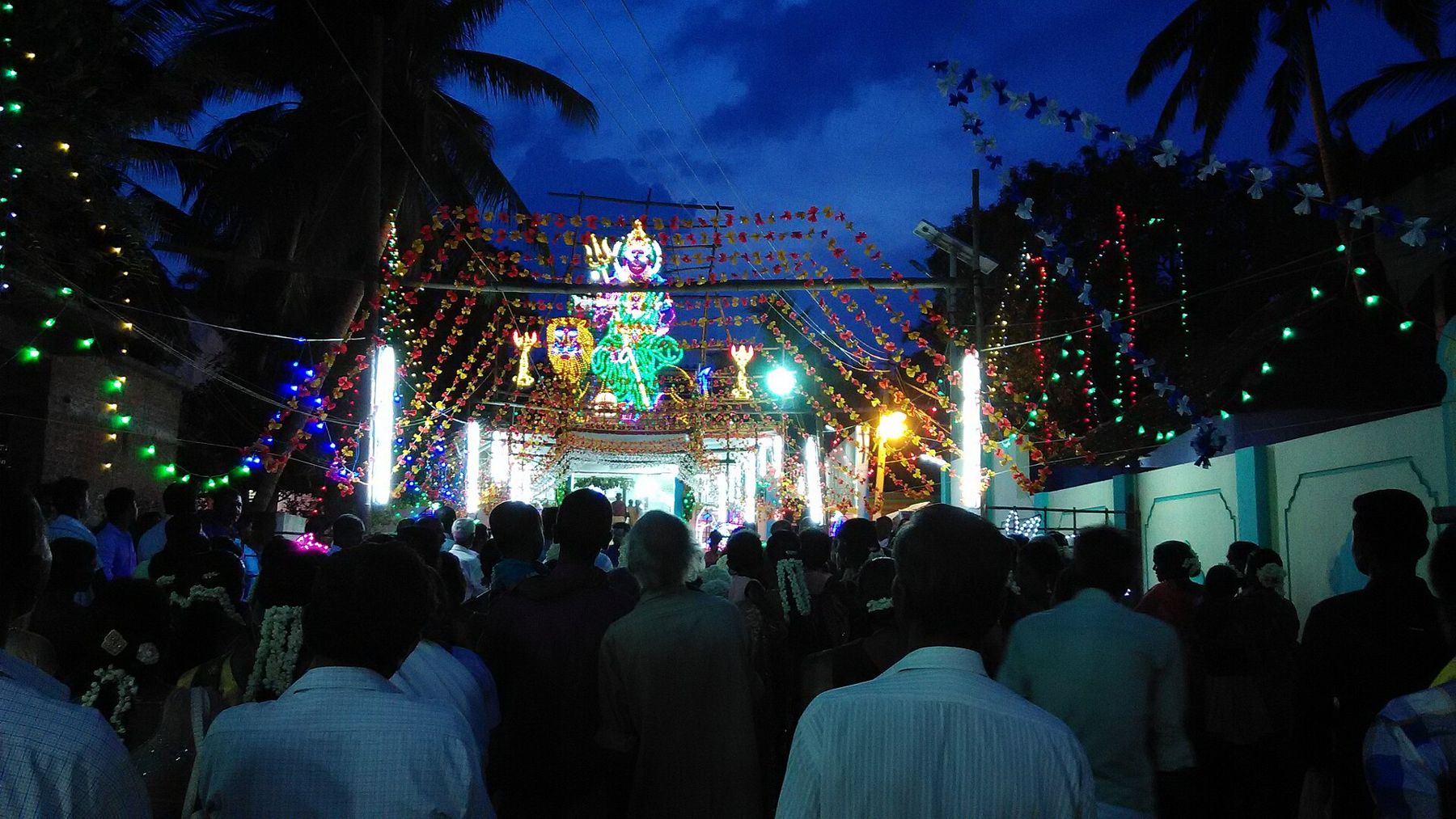
A big temple festival usually runs for ten days or more, with something happening every day. Each morning and evening, the processional images of the deities are carried out of the temple on a vahana, a vehicle in the form of an animal, bird or mythical creature: a bull, a swan, a serpent, a peacock, a horse, the eagle Garuda. Musicians play the nadaswaram, the long double-reed pipe of Tamil temples, and the thavil drum. Streets are decorated with lights and arches, stalls spring up selling toys, sweets and bangles, and the whole town takes on the feel of a fair.
The climax is often the car festival, followed by a ceremonial bath of the deities in the temple tank or a river, and sometimes a float festival on the tank. Smaller festivals happen all through the year, so even outside the great dates, you may find a procession on the streets on the evening of your visit.
Respect during festivals
Festivals are religious occasions first, and celebrations for local people second. Visitors are generally welcome to watch. Keep out of the way of processions, never block a deity's path for a photograph, and follow the crowd's lead in when to stand back. Dress modestly, guard your belongings in dense crowds, and drink plenty of water.
If you cannot time a trip for a festival, ask at the temple about the evening procession. Many temples carry the deities around the inner corridors on certain weekdays or lunar days, with music and lamps, and these small rituals are open to quiet onlookers.
Planning around festivals
Festivals are the best and worst times to visit. The towns are at their most alive, but streets close, queues stretch for hours, accommodation fills and prices rise. If you want to see a festival, plan early, base yourself within walking distance and expect to spend more time waiting than you think. If you want calm visits, check the festival calendar and avoid those days.
For the towns in this guide: Madurai's festivals are covered in the Meenakshi temple and Madurai's ring streets. For Srirangam's great day, read walking inward through the seven enclosures. Dates change every year: always confirm them with the temple.