Linking the six towns by train and road
The temple towns of Tamil Nadu lie along a natural route from Chennai down through the Kaveri delta to Madurai and the island of Rameswaram. Trains, buses and hired cars link them all.
i
Dr. Chinchu C · CC BY 4.0The six temple towns in this guide are spread across Tamil Nadu, but they fall along a natural line. Start in Chennai, head south to the Pallava sites at Kanchipuram and Mamallapuram, follow the coast to Chidambaram, cross into the Kaveri delta for Kumbakonam and Thanjavur, continue to Tiruchirappalli and Srirangam, then go south to Madurai and finally east to Rameswaram. With ten to twelve days, you can see them all at a humane pace.
The route, stage by stage
| Stage | Typical distance | How |
|---|---|---|
| Chennai to Kanchipuram | About 75 km | Train, bus or car |
| Kanchipuram to Mamallapuram | About 65 km | Bus or car |
| Mamallapuram to Chidambaram | About 180 km | Bus or car along the coast |
| Chidambaram to Kumbakonam | About 75 km | Train, bus or car |
| Kumbakonam to Thanjavur | About 40 km | Train, bus or car |
| Thanjavur to Tiruchirappalli | About 60 km | Train, bus or car |
| Tiruchirappalli to Madurai | About 140 km | Train, bus or car |
| Madurai to Rameswaram | About 170 km | Train, bus or car |
Distances are approximate road distances. Journey times vary widely with traffic and the type of transport; check current timetables.
By rail
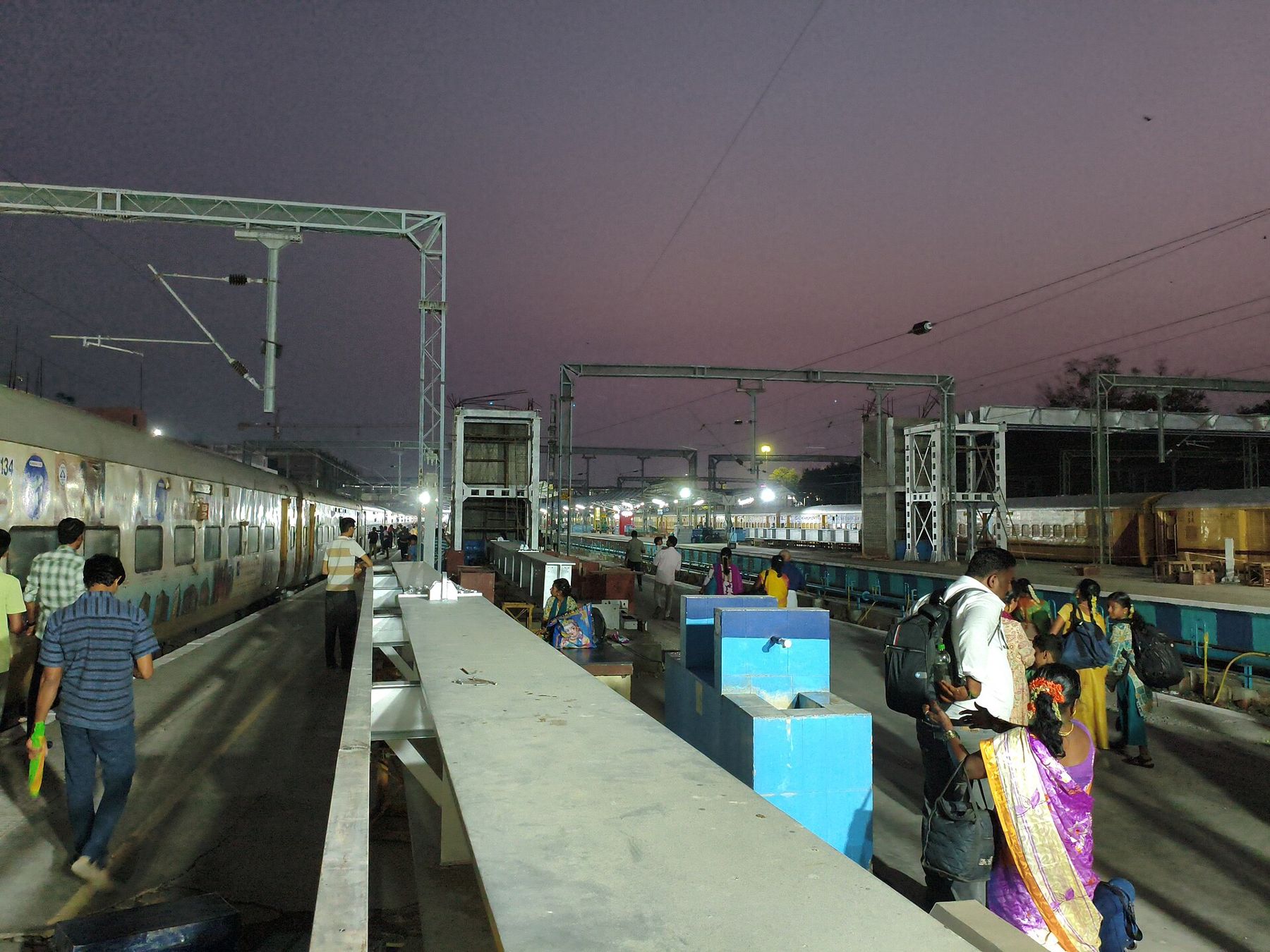
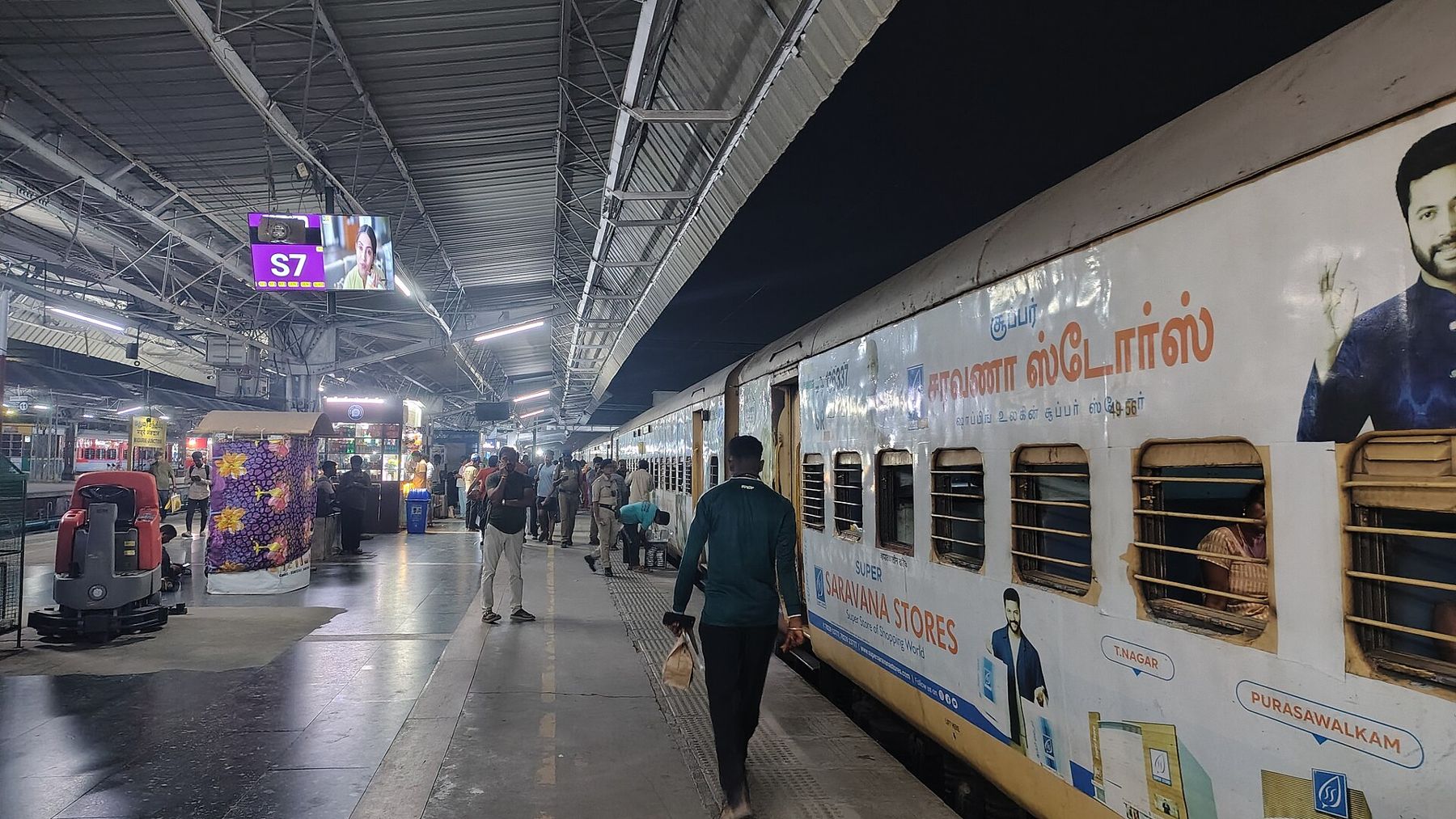
Indian Railways links most of the towns. The main line south from Chennai runs through Tiruchirappalli to Madurai, and branch lines serve Chidambaram, Kumbakonam, Thanjavur and Rameswaram. Trains are generally the most comfortable way to cover longer distances. Classes range from unreserved seating to air-conditioned sleeper and chair cars. Reserved seats on popular routes sell out, especially around festivals and holidays, so book as early as you can through the official railway booking system.
i
Manukrishnan80 · CC BY-SA 3.0Buses
State-run and private buses connect every town on the route, often very frequently. They are cheap and go everywhere, but can be crowded and slow, especially on smaller roads. Larger towns have bus stands with services in every direction. For short hops, such as Kumbakonam to Thanjavur or Kanchipuram to Mamallapuram, buses are often the easiest option.
Hired cars
Many visitors hire a car with a driver for all or part of the trip. It is more expensive than public transport but flexible, and it makes the most sense for stretches with poor rail links, such as the coast road south of Mamallapuram, and for days visiting several temples in the delta. Agree the route, the days and what is included before you set off. This guide recommends no operator.
A suggested order
- Days 1 and 2: Kanchipuram and Mamallapuram, from Chennai or staying locally.
- Day 3: down the coast to Chidambaram.
- Days 4 and 5: Kumbakonam and the delta temples, then Thanjavur.
- Day 6: Tiruchirappalli and Srirangam.
- Days 7 and 8: Madurai.
- Days 9 and 10: Rameswaram and Dhanushkodi, then back to Madurai.
Add spare days for rest, rain or festivals. Madurai, Tiruchirappalli and Chennai have airports, which make it easy to fly in at one end and out at the other.
Bases along the route
For a route like this, base yourself in a few larger towns and make day trips from them. Kanchipuram or Chennai covers the Pallava sites; Kumbakonam or Thanjavur covers the delta; Tiruchirappalli covers Srirangam and the Rockfort; Madurai is a base in its own right and the jumping-off point for Rameswaram. Fewer moves mean less packing and more time in the temples. This guide does not recommend places to stay.
Travel days
Use travel days well. Temples close for part of the afternoon, so a midday train between towns wastes little sightseeing time. Arrive in time for the evening rituals, which are often the most atmospheric part of a temple's day. On longer stretches, such as the coast road south from Mamallapuram, stop at smaller temples and villages along the way rather than racing through.
Rail journeys in Tamil Nadu are also a pleasure in their own right: rice fields, palm groves, temple towers rising over villages, and a steady stream of tea and snack sellers along the platforms at every stop. Bring a book and enjoy them.
Food on the road
South Indian vegetarian food is easy to find everywhere on this route, from idli and dosa at breakfast to rice meals at lunch, often served on a banana leaf. Temple towns have many simple vegetarian eating places near the main gates. Drink bottled or filtered water, and in the heat add a little salt and sugar to your day with the fresh lime and buttermilk drinks sold everywhere.
Heat and seasons
The cool season, roughly November to February, is the most comfortable time to travel, though the northeast monsoon can bring heavy rain to the coast in October to December. April to June is very hot inland. Travel early in the day, carry water, and leave the middle of the afternoon for rest.
Whichever way you travel, build slack into the plan. Trains run late, roads close for festivals, and the best moments of a temple trip, a procession glimpsed at dusk or an unexpected invitation to watch a ritual, rarely fit a tight schedule.
Tips for the road
- Keep copies of tickets and identity documents; trains check them.
- Carry small change for buses, shoe counters and offerings.
- Pack light: you will be on and off trains and buses often, and carrying heavy bags through crowded stations is no fun.
- Temples close in the afternoon, which makes the early afternoon a good time to travel.
For the towns themselves, start with Madurai's Meenakshi temple or Thanjavur's great tower, and plan festival days with a year of temple festivals.