Ekambareswarar, Varadharaja and the silk lanes
Kanchipuram is split between Shiva and Vishnu, with a great temple to each, and between the temples runs a town of handlooms weaving some of India's most prized silk.
i
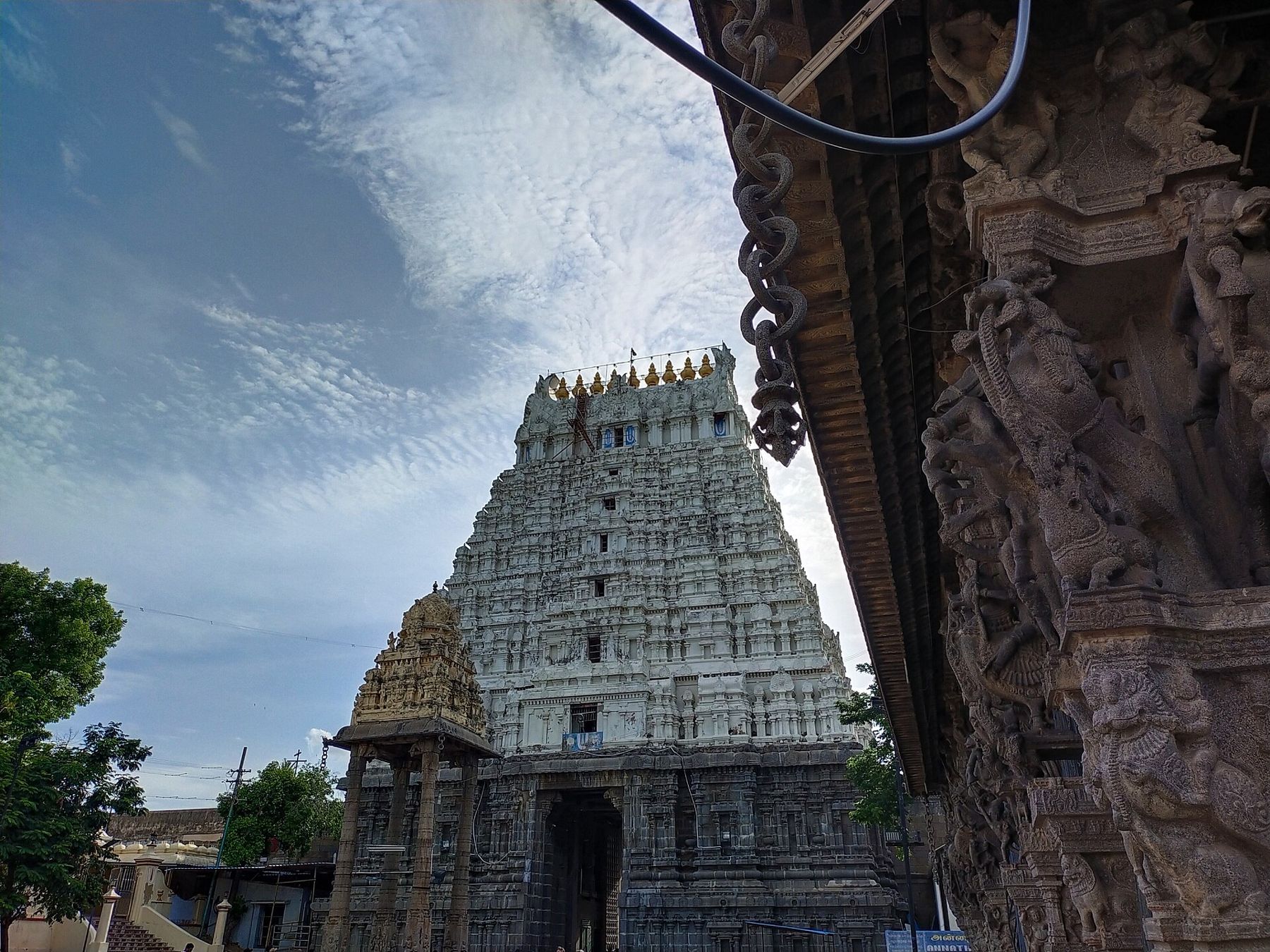
Luistxo · CC BY-SA 4.0Kanchipuram has long been described in two halves: Shiva Kanchi and Vishnu Kanchi, after the two great traditions whose temples dominate them. A day here can move between both, with a third thread running through it, the silk that the town's weavers have worked on handlooms for generations. All three are worth your attention. None needs to be bought.
Ekambareswarar
The Ekambareswarar temple is the largest Shiva temple in Kanchipuram. Its southern gateway tower is among the tallest in Tamil Nadu, around fifty-nine metres, and is usually attributed to the Vijayanagara period of the sixteenth century. Inside, a long series of courtyards and pillared halls leads to the shrines.
The temple is one of the five Shiva temples associated with the five elements, and here the element is earth. Its best-known feature is an ancient mango tree in an inner courtyard, linked by tradition to the story of Parvati's devotion to Shiva; the temple describes it as thousands of years old. The tree you see has been tended and renewed over the years, but its place in the story is the point.
Varadharaja Perumal
On the eastern side of town stands the great Vishnu temple, the Varadharaja Perumal, one of the 108 holy sites of Vishnu worship celebrated by the Tamil saint-poets. Its most famous hall has around a hundred carved pillars, with horse riders, dancers and mythical beasts, and stone chains carved from a single block hanging at the corners: a favourite piece of sculptors' bravado.
The temple holds a wooden image known as Athi Varadar, kept submerged in a temple tank and brought out for public worship only once in about forty years. The last occasion, in 2019, drew millions of pilgrims. Between those years the temple keeps its ordinary rhythm of morning and evening rituals.
The silk in the lanes
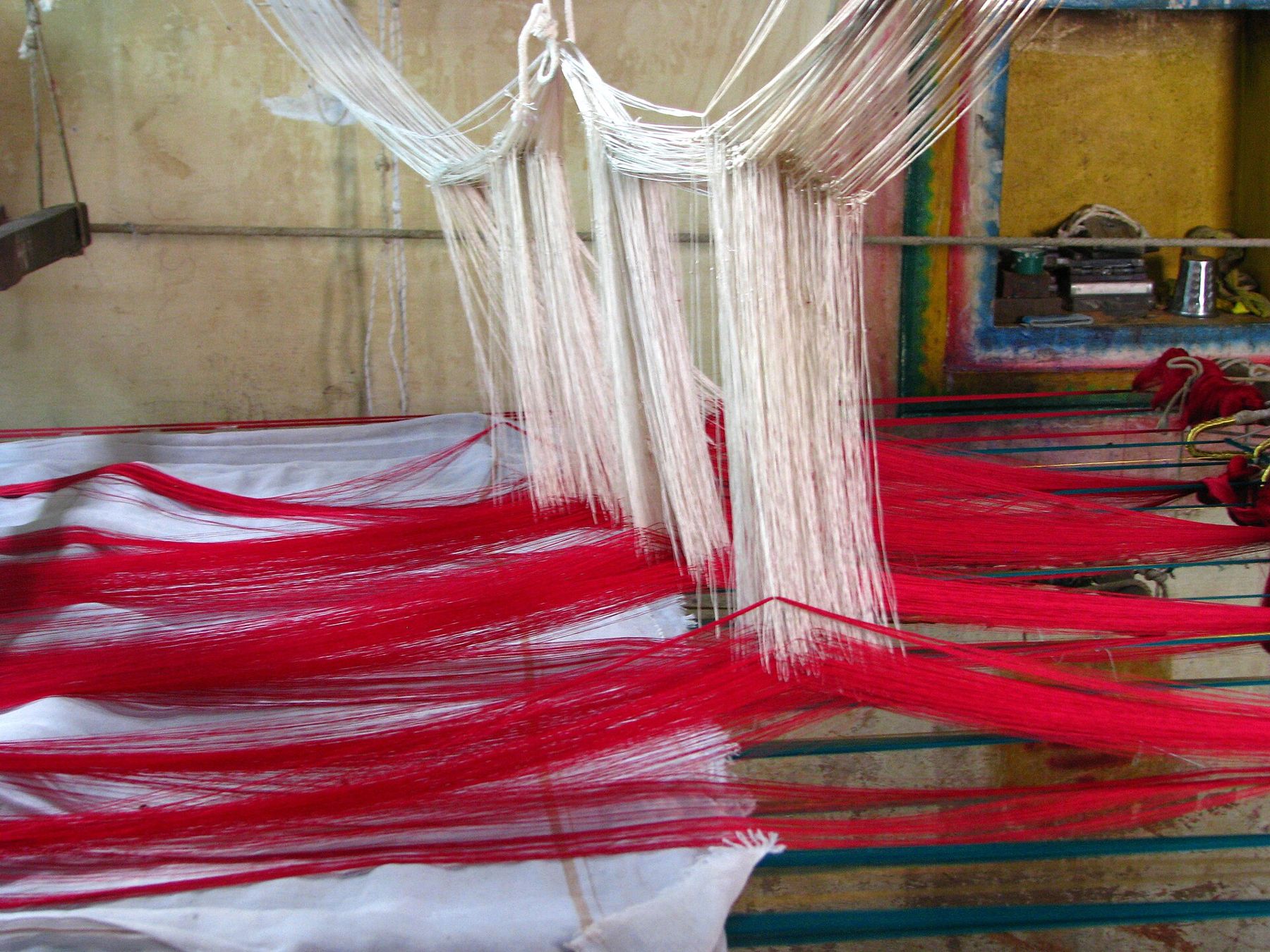
Kanchipuram silk is heavy mulberry silk, often woven with gold-thread borders. Many of the best saris use a technique called korvai, in which the body and border are woven separately in contrasting colours and joined on the loom so firmly that they become one cloth. The designs draw on temple motifs: gopurams, peacocks, mango shapes, checks and stripes.
i
McKay Savage · CC BY 2.0The handlooms are often set up in homes and small workshops in the lanes, and the sound of shuttles carries into the street. If someone invites you to watch, that is generous; if someone insists on taking you to a showroom, you are free to decline. There is no need to buy anything to appreciate the craft, and this guide recommends no seller.
Other temples on the way
Between the two great temples stands the Kamakshi Amman temple, one of the most important goddess temples in South India, at the heart of the town. It is busy throughout the day with devotees, and its golden roof over the inner shrine catches the light from the street. As elsewhere, entry to the inner parts may be limited, and the outer courtyards are where most visitors spend their time.
Smaller shrines appear on almost every street. Some are centuries old, others recently built, and many are tended by families who have served them for generations. If a doorway is open and the atmosphere welcoming, a respectful look from the threshold is usually fine; if the doors are closed or a ceremony is under way, move on.
Storey III · KanchipuramKailasanathar, the oldest stone in KanchipuramReading a silk sari
If you watch weaving, a few things help you see what is happening. The border and the pallu, the decorated end of the sari, are planned before the loom is set up, and complex designs are controlled by punched cards or by a second weaver working the pattern threads. A single sari can take many days, or weeks for elaborate pieces. The gold thread in traditional pieces is made by wrapping fine metal around a silk core.
The town's silk has protected geographical status, which is meant to guarantee that the name is used for work made here in the traditional way. Prices and quality vary enormously, and there is no shortage of imitations elsewhere. That, however, is a matter for buyers. For a visitor, the real treat is the sound and sight of a loom at work.
How to see it calmly
Kanchipuram is close enough to Chennai for a day trip, but staying a night makes the day less rushed. Start early at one of the great temples, rest through the midday heat, and visit the other in the late afternoon. Fit the quiet Kailasanathar between them.
Temple hours vary, and most close for part of the middle of the day. Non-Hindus may be asked to stay outside the inner sanctums. Shoes stay at the gate, and shoulders and knees should be covered. Some shrines ask men to remove shirts. Offer only what you wish at the shrines, and decline politely anyone who presses you for a fee you did not expect.
Both great temples hold major car and procession festivals, often around April and May, and the Varadharaja temple's Brahmotsavam brings large crowds. Vaikunta Ekadasi in December or January is especially important at Vishnu temples. Dates follow the Tamil calendar: see a year of temple festivals.
Getting here and on
Trains and buses connect Kanchipuram with Chennai, and Mamallapuram is a drive of about an hour and a half to the southeast. See the Pallava coast at Mamallapuram for the coast, and linking the six towns for the long route south.