Visiting a Tamil temple well: shoes, dress, hours, cameras
Tamil temples are working places of worship that welcome visitors, but each has its own rules. A few general customs, followed with care, make every visit smoother and more welcome.
i
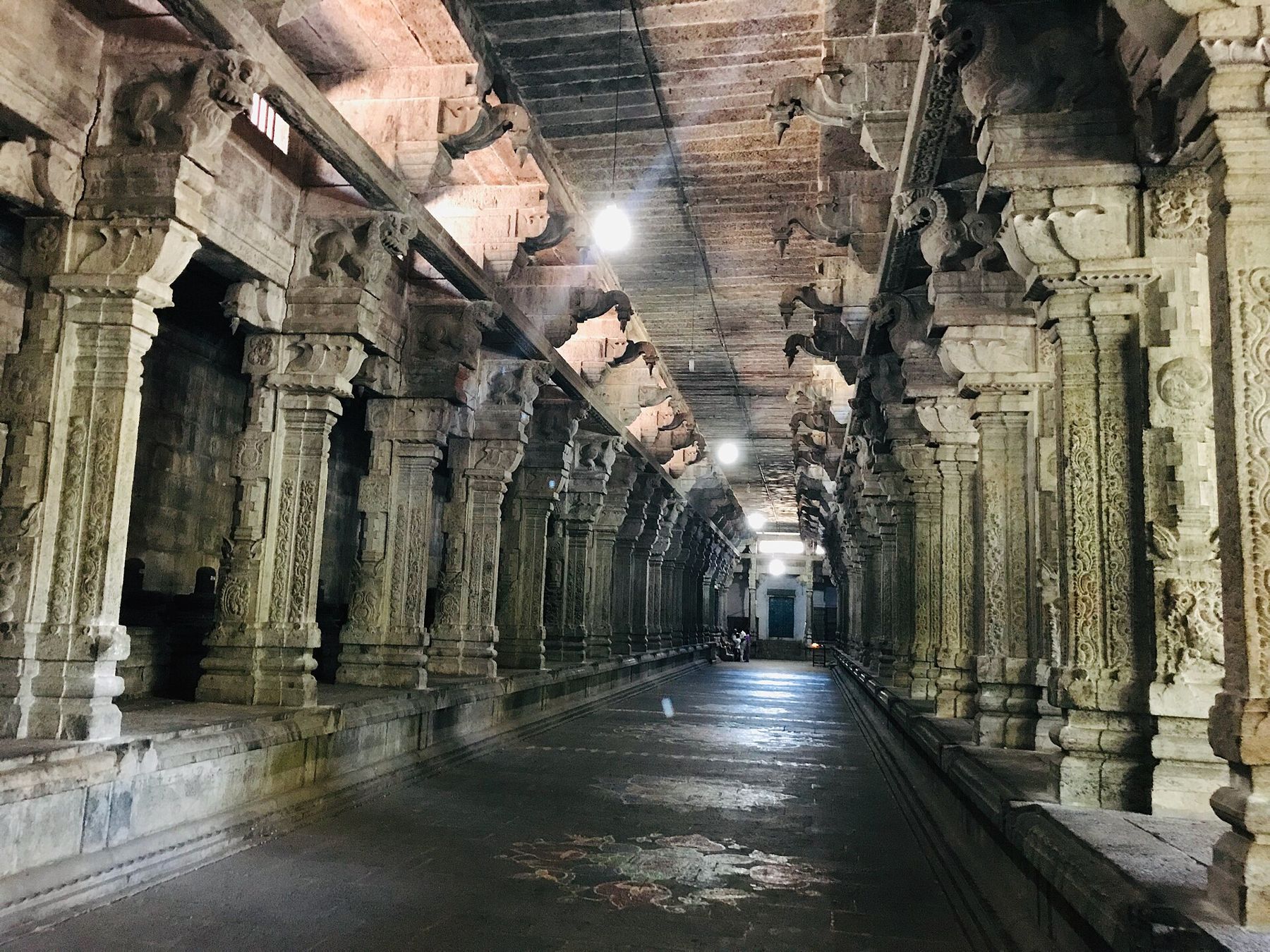
Ms Sarah Welch · CC BY-SA 4.0The great temples of Tamil Nadu are not museums. They are living places of worship, open from before dawn until late at night, where rituals continue as they have for centuries. Most welcome visitors of every background to their outer courtyards and halls. Rules vary from temple to temple and change over time, so treat what follows as general custom, and always follow signs and the instructions of temple staff.
Shoes off, socks on
Shoes are always removed before entering a temple. Large temples have counters near the main gateways where footwear is kept, usually for a small fee; smaller temples have racks or simply a corner by the gate. Keep your ticket safe, and note which gate you used, because large temples have several and they are far apart.
Stone floors in open courtyards can become painfully hot by late morning. Many visitors walk in socks, which is generally acceptable, or time visits for early morning and evening. Some inner areas may ask you to remove socks too.
Dressing for the temple
Cover shoulders and knees. Loose, light clothing is most comfortable: long trousers or a long skirt, and a shirt with sleeves. A light scarf or shawl is useful for covering up. Some temples ask men to remove shirts before entering the inner shrines and to wear a dhoti, the wrapped cloth common in South India, and some ask women to wear a sari or similar traditional dress for entry to certain areas. These rules are set by each temple and can change; ask at the gate.
Avoid leather where you can, especially belts and bags, as some temples discourage it.
i
Thamizhpparithi Maari · CC BY-SA 3.0Hours
Most temples open early in the morning, often around five or six, close for a few hours in the middle of the day, and reopen in the late afternoon until night. Rituals are performed at fixed times through the day, and some areas close during them. Festival days change the hours. Check locally, either at the temple or with people where you stay.
Early morning is usually the calmest and most atmospheric time, with the first rituals, the smell of camphor and flowers, and cool stone underfoot.
How far visitors go
In some temples, entry to the innermost sanctum is restricted to Hindus. This is a long-standing rule in many places and should be respected without argument. Signs or staff will show where non-Hindu visitors should stop. In others, everyone may enter. Even where the sanctum is closed to you, the outer corridors, halls and courtyards usually hold most of the architecture and sculpture you came to see.
Cameras and phones
Photography is often allowed in outer courtyards, sometimes for a small fee, and rarely or never near the inner shrines. Some temples ban phones and cameras entirely, with deposit counters at the gates. Never photograph people praying or performing rituals without permission, and never use flash near shrines.
Storey Base · Festival calendarA year of temple festivals in Tamil NaduOfferings and queues
You are under no obligation to make an offering. If you wish to, flowers, coconuts and fruit are sold near most temples, and small donations can be placed in the boxes inside. Inside, priests may offer you sacred ash, kumkum or a lamp to pass your hands over; accept with your right hand if you wish, or politely decline.
Many temples have separate queues for general entry and for special, faster darshan with a ticket. Arrangements and prices are set by the temple. Use official counters, and be wary of anyone outside offering to speed you through for a fee.
Reading a temple as you walk in
Most large Tamil temples follow a similar plan, which helps you find your way. You enter through a gopuram, a gateway tower, in the outer wall. Inside, a series of enclosures, called prakarams, nest one inside another, each with its own walls and gateways, growing more sacred as you move inward. Between them lie pillared halls, called mandapams, used for rituals, music and gatherings, and usually a temple tank for ritual bathing. At the centre stands the sanctum, where the main deity lives, under a tower called the vimana.
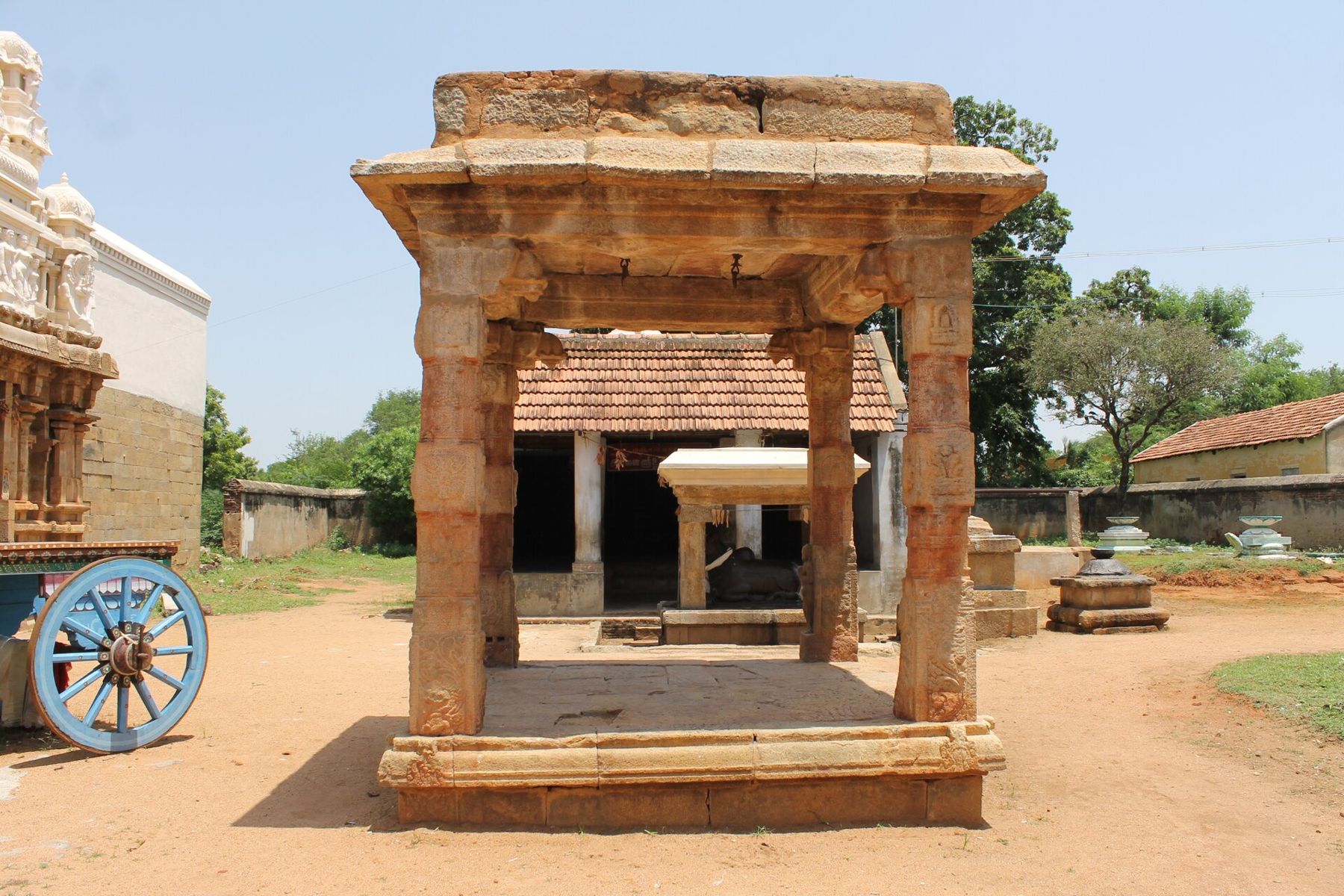
Shrines to the goddess, to Ganesha, to Murugan and to other deities sit within the enclosures, each with its own small rituals. In front of a Shiva shrine you will usually find a Nandi, the bull, facing the sanctum; in front of a Vishnu shrine, the eagle Garuda.
Priests, attendants and guides
Priests perform the rituals and may offer blessings; temple staff manage queues, footwear and tickets. Outside many large temples, men offer their services as guides. Some are knowledgeable, some less so, and prices are rarely fixed. If you want a guide, agree what is included and the price before you start, and feel free to say no. A good printed plan of the temple and a slow walk are often enough.
Women visitors
Women are welcome in Tamil temples, and many come alone or in groups. Some temples have separate queues at busy times. In some traditions, women who are menstruating do not enter temples; visitors may decide for themselves whether to follow this, but should be aware of it.
Courtesies at the shrine
- Walk around shrines clockwise, keeping them on your right.
- Do not touch images or sculptures in worship, and do not climb on carvings.
- Keep voices down near shrines and during rituals.
- Do not point your feet toward a shrine when sitting.
- Eat and drink only outside, or where others do.
- Use your right hand to give and receive.
For festival days and crowds, see a year of temple festivals. For reading the architecture once you are inside, start with the Meenakshi temple in Madurai, the most complete example, and Kailasanathar in Kanchipuram, one of the oldest.