Madurai's ring streets, named for Tamil months
Around the Meenakshi temple the old city of Madurai is laid out in nested squares of streets, named for the months of the festivals that pass along them.
i
युकेश at Hindi Wikipedia · Public domainMost Indian cities grew outward in every direction at once. Old Madurai grew in squares. The Meenakshi temple sits at the centre, and around it the streets run in concentric rectangles, one inside the next, each ring named after a month of the Tamil calendar. Learn the order and the city starts to make sense: you can always tell how far you are from the temple by the name of the street you are standing on.
The rings, from the inside out
Inside the temple walls, the corridors around the shrines are called the Aadi streets. Just outside the walls run the four Chithirai streets: East, South, West and North. Next come the Avani Moola streets, then the Masi streets, and beyond them the Veli streets, which follow the line of the old fortifications. The Veli streets are the outer ring because the walls themselves came down in the nineteenth century, and the roads were laid where they had stood.
The naming is not decoration. Each ring is used by the procession of a festival held in the month it is named after. When the deities are carried out of the temple on their festival days, the route tells you which month it is.
Festival routes
The busiest of these is the Chithirai festival in April or May, when the wedding of Meenakshi and Sundareswarar is celebrated and huge wooden temple cars are pulled through the Masi streets by thousands of hands. The wide Masi streets were made for this: the cars are tall, heavy and slow, and the crowd moves with them. On those days the outer rings belong to the festival, traffic is diverted and the city's population swells with visitors from the countryside.
Smaller festivals use the inner rings at other times of the year, so on almost any visit there is a chance of meeting a procession, with drums and lamps, coming round a corner. Step aside, let it pass, and follow at a distance if you like.
What each ring feels like now
The Chithirai streets, closest to the temple walls, are partly pedestrian and full of pilgrims, flower sellers and stalls of offerings. They are the gentlest place to begin. The Avani Moola streets are narrower and busy with small trade. The Masi streets are broad, loud commercial arteries, crowded with traffic by day.
Storey I · MaduraiMeenakshi Amman Temple: fourteen towers and a thousand pillarsThe rings hold specialised trades in places, a habit of many old Indian cities, with lanes given over to cloth, brass, flowers or tailoring. These change over time, so wander rather than hunt. Nothing on this page sends you to a particular shop, and nothing needs to: the streets are the point.
Walking the plan at dusk
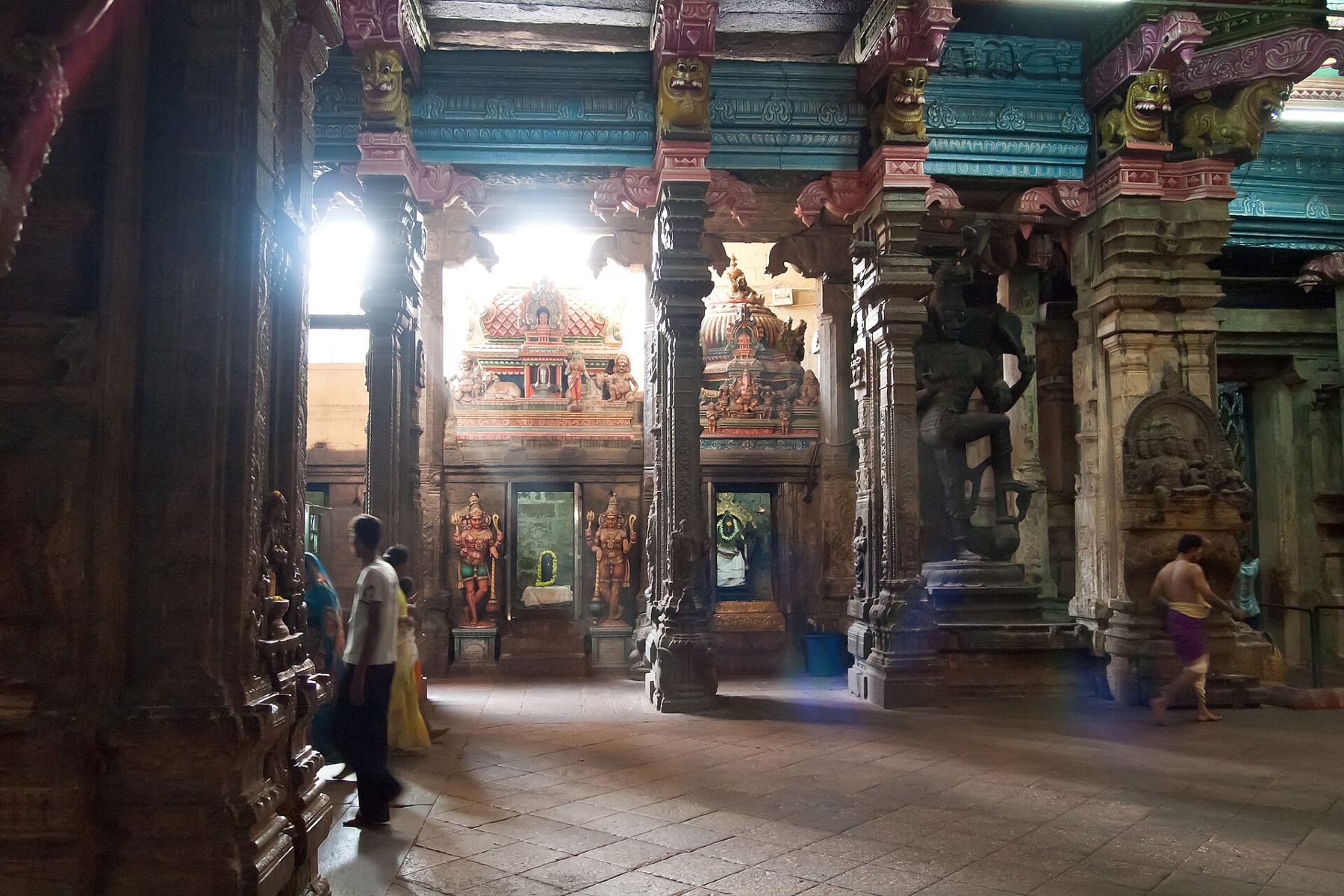
The best time to walk is late afternoon into evening, when the heat eases and the temple's gopurams catch the last light. Start at the East Chithirai street, walk the full square around the temple walls, then step out one ring and walk part of the Avani Moola streets before turning back toward the lights of the gateways. A full circuit of the inner ring alone takes well under an hour at an easy pace.
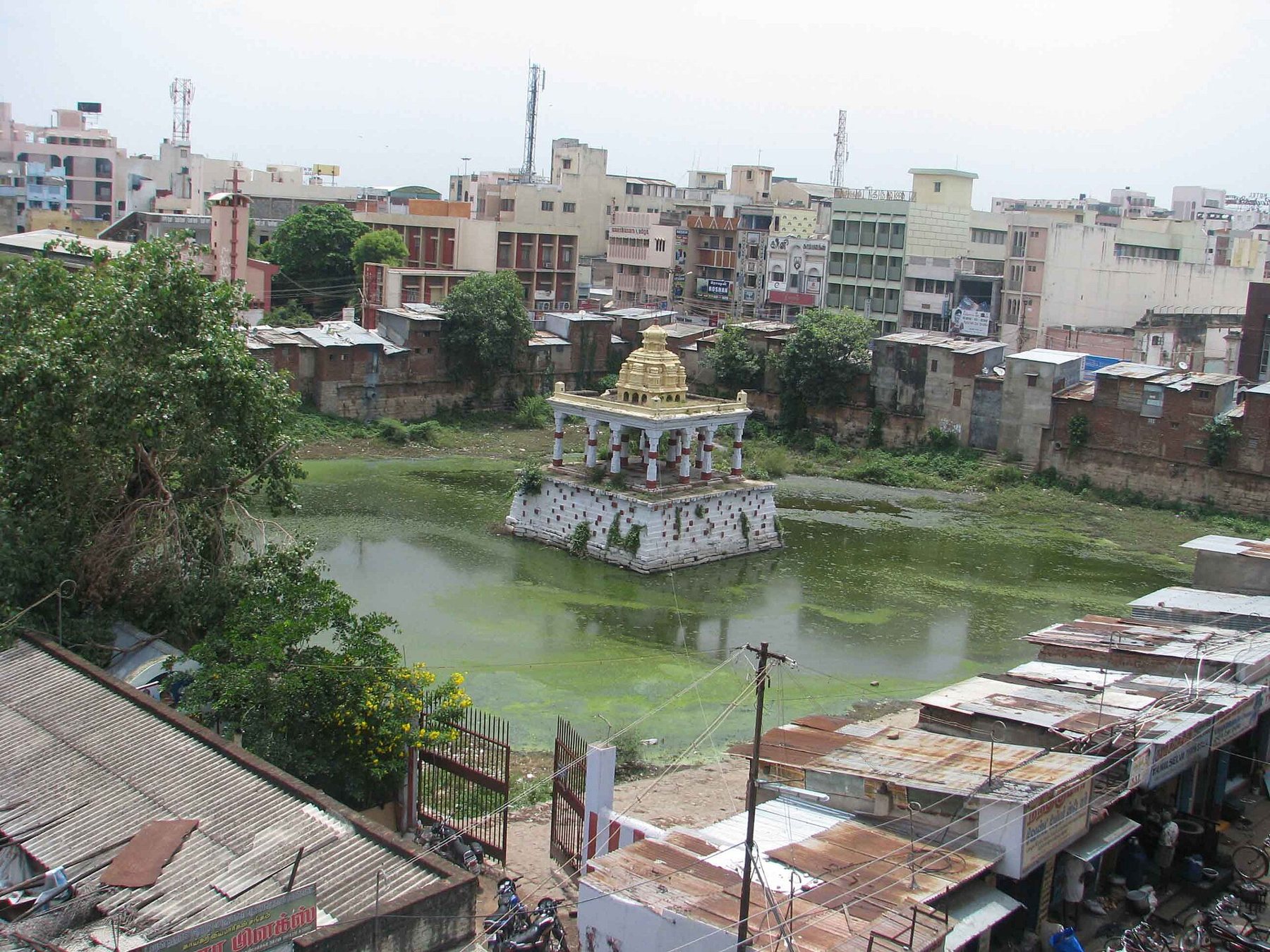
After dark the towers are lit and the temple corridors are busy with the evening rituals. If you have not yet been inside, this is a good moment to go in. For the palace and the float-festival tank to the southeast, see the Nayak palace and the Teppakulam.
i
Vyacheslav Argenberg · CC BY 4.0Why a city in squares
The plan is often compared to a lotus, with the temple as its centre and the streets as rings of petals. Texts on temple architecture describe how a sacred town should be laid out around its shrine, and Madurai is one of the clearest examples in South India of that idea carried into a working city. The Nayak rulers, who rebuilt the temple in the sixteenth and seventeenth centuries, also reshaped the city around it, and the pattern has held ever since, through colonial rule and modern growth.
The result is a city where religion and daily life share the same map. Shops, homes, schools and offices fill the rings, but the processions still have right of way on their days, and the gateway towers are the landmarks everyone steers by. If you lose your bearings, look up for a gopuram and walk toward it.
Crossing traffic, keeping cool
Madurai's traffic is dense and unhurried rather than fast, but it does not stop for pedestrians. Cross with locals, at a steady pace, and keep to the edges of the Masi streets. Two-wheelers use every gap.
The city is hot for much of the year, and very hot from April to June. Carry water, walk in the morning or after four in the afternoon, and use the temple's cool corridors as a midday refuge. The rains of the northeast monsoon, roughly October to December, bring some relief and occasional flooded lanes.
Beyond the rings
North of the old city, the Vaigai river crosses Madurai, often low or dry outside the monsoon months. It plays its part in the Chithirai festival too, when the deity Kallazhagar is brought to the river in one of the season's great gatherings. For the bigger picture of the temple year, see a year of temple festivals, and for getting on to Thanjavur or Rameswaram, linking the six towns.