How the great tower was built: Thanjavur's Brihadeeswarar
A thousand years ago a Chola king raised a granite tower over sixty metres high above a stone courtyard in the Kaveri delta. It is still in worship, and it still stops people in their tracks.
i
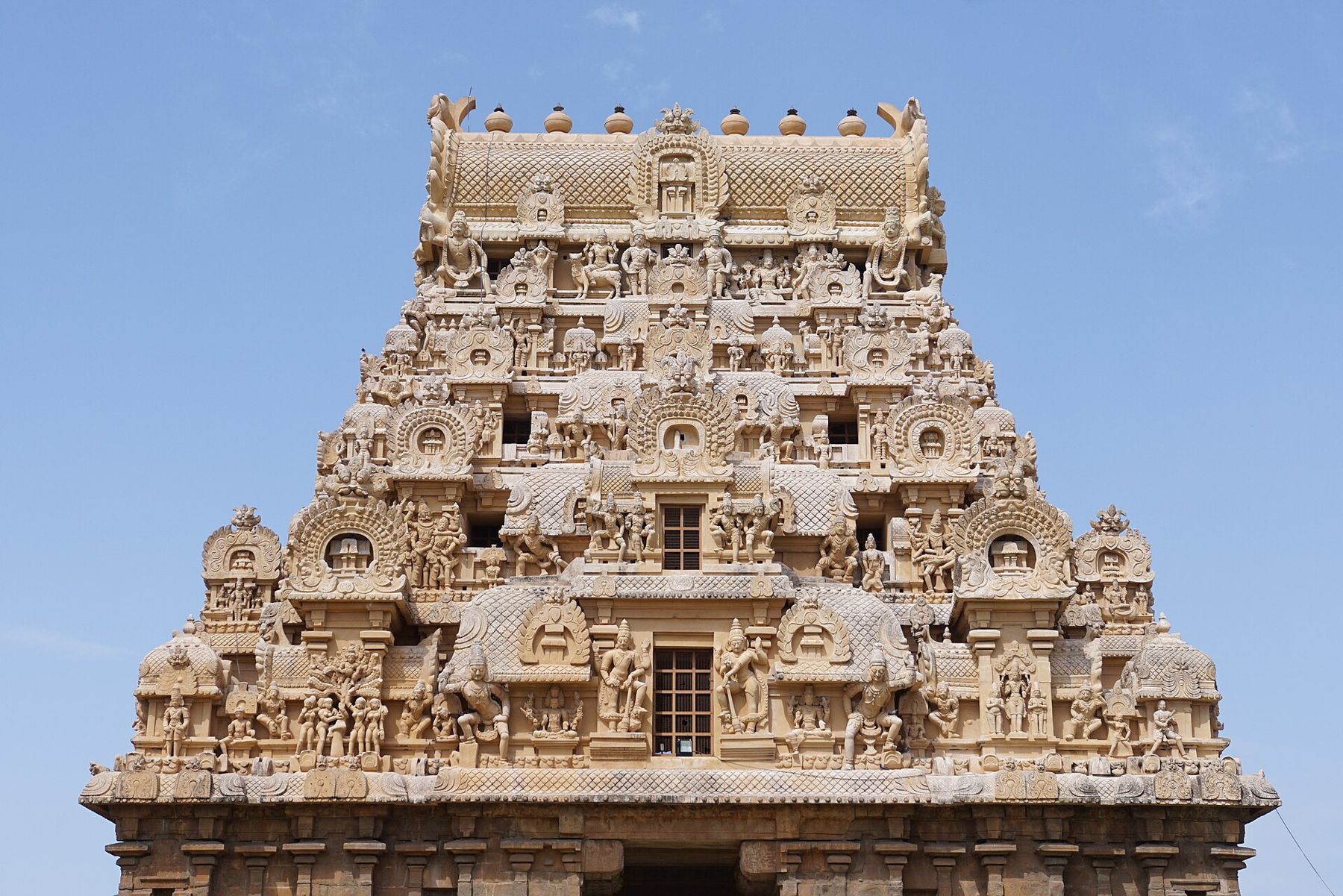
Vengolis · CC BY-SA 4.0Many temples in Tamil Nadu announce themselves with their gateway towers. At Thanjavur the gateways are only a prelude. Walk through the two eastern gopurams and the courtyard opens on the vimana, the tower over the sanctum itself, rising in tiers of granite to a height of about sixty-six metres. It was completed around 1010 by the Chola king Raja Raja I, and for centuries it was among the tallest structures of its kind anywhere.
The temple is dedicated to Shiva, and it is still a working place of worship. It is also part of the UNESCO-listed Great Living Chola Temples, together with the temples at Gangaikonda Cholapuram and Darasuram.
A tower built of granite
The most striking thing about the Brihadeeswarar is the material. The delta around Thanjavur is flat, fertile land with no granite of its own, so every block had to be brought from elsewhere. The tower rises in some thirteen diminishing storeys to a dome-shaped crowning stone, the shikhara, which tradition describes as a single block weighing around eighty tonnes.
How it was lifted remains a matter of discussion. The best-known explanation is a long earthen ramp built up from a distance and later removed, along which the stone was dragged. Historians have suggested other methods too, using scaffolds and gradual raising. No account from the time explains it, so the question stays open, and part of the pleasure is standing in the courtyard and working it out for yourself.
i
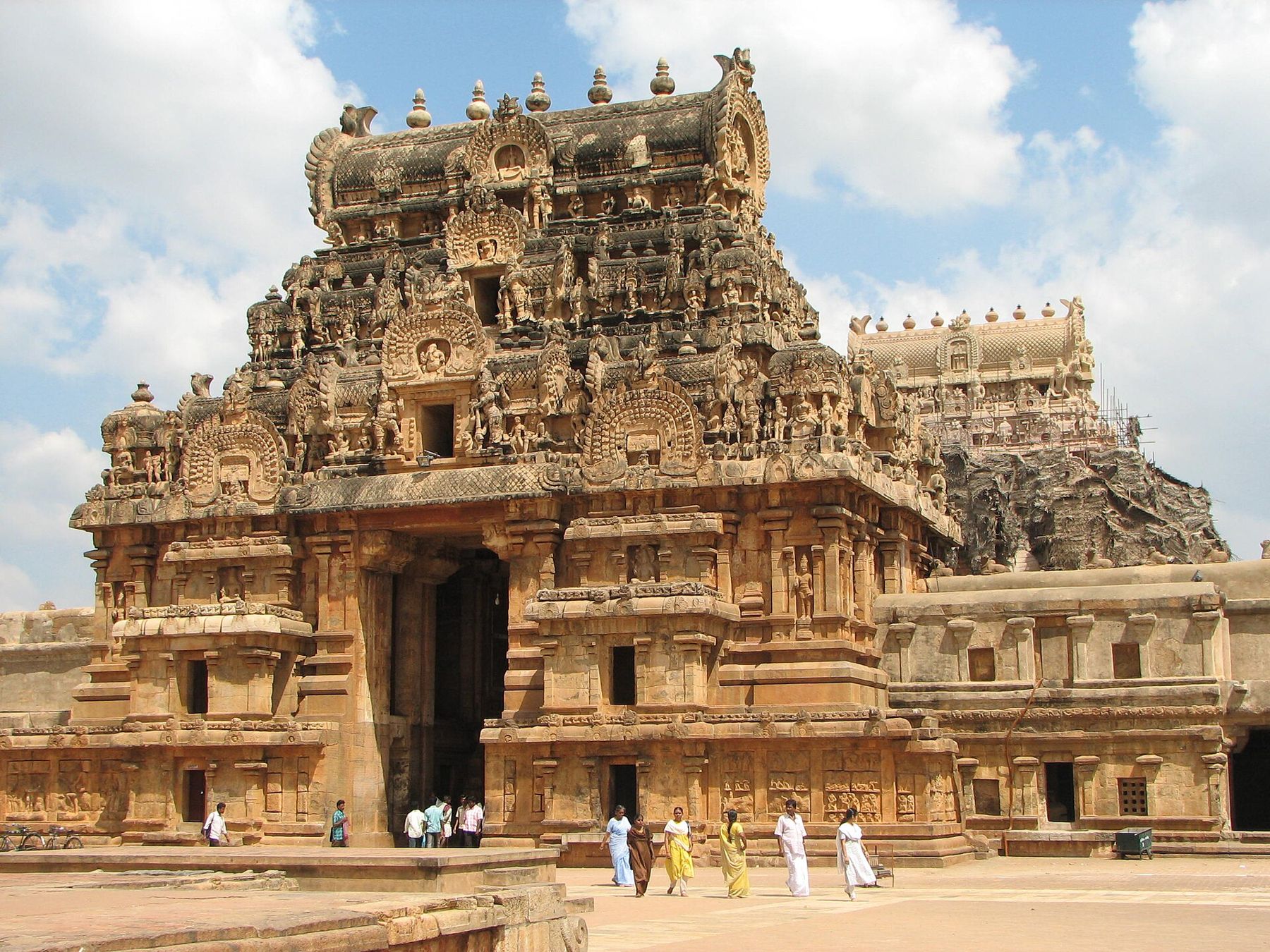
Bernard Gagnon · CC BY-SA 3.0Unlike most later Tamil temples, where the gateways outgrow the shrine, here the vimana dominates. The Chola builders made the god's house the tallest thing in the kingdom. Later dynasties reversed the proportions, which is why at Madurai or Srirangam the gopurams tower and the shrines are modest.
The courtyard and the Nandi
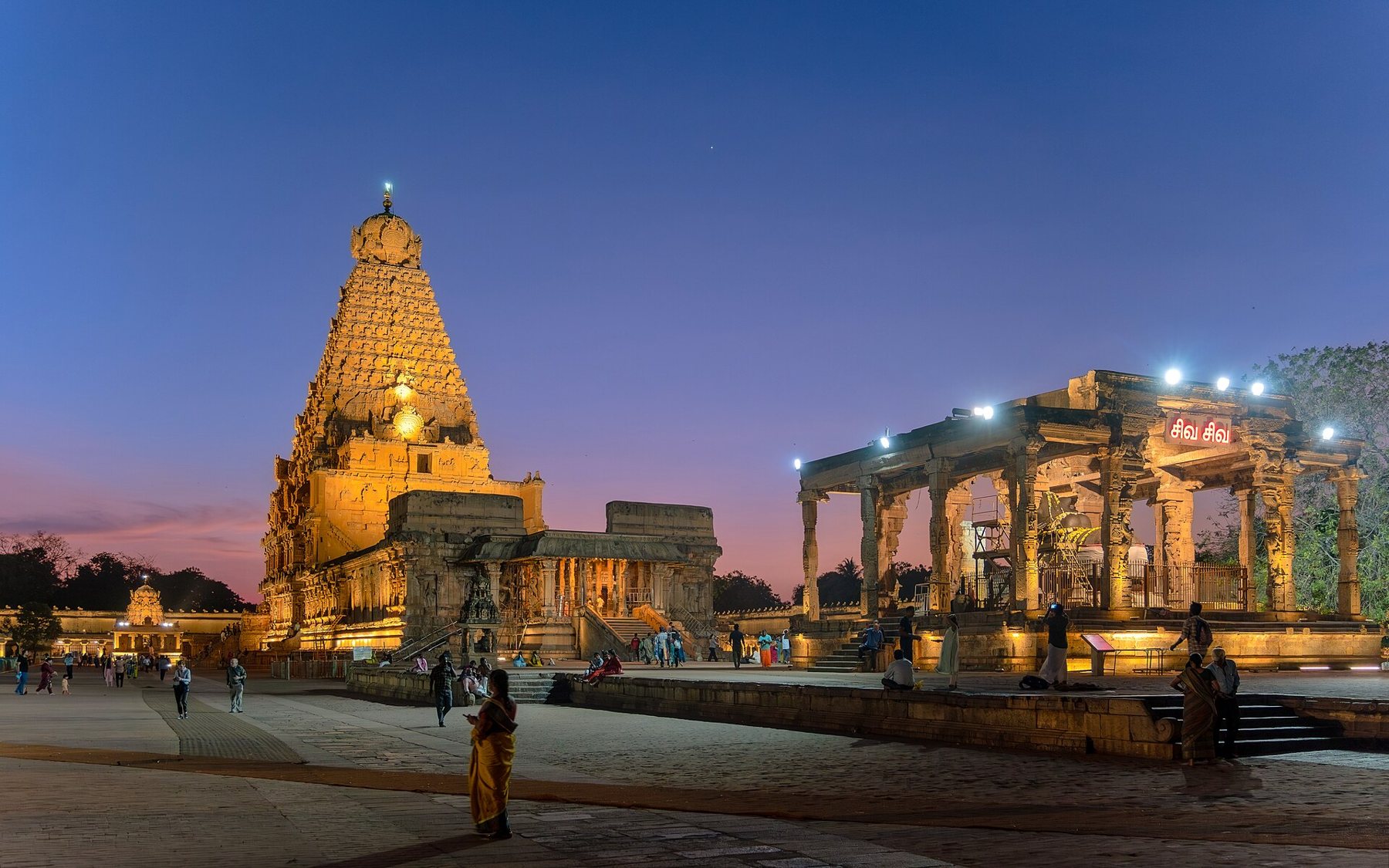
The courtyard is vast, paved and open, with smaller shrines set along its edges and a pillared cloister running round the walls. Facing the main shrine sits a great Nandi, Shiva's bull, carved from a single stone and sheltered by a pavilion that was added later, in the Nayak period. It is one of the largest Nandi figures in the country, and devotees stop here before approaching the sanctum.
i
Original: Rainer Halama Derivative work: UnpetitproleX · CC BY-SA 4.0The base of the main shrine is covered in inscriptions in Tamil script. They record the king's gifts to the temple, the gold, the land and the people assigned to serve it, including hundreds of dancers, musicians and craftsmen. Even if you cannot read them, run your eye along the long lines of letters cut into the stone: they are one of the great documents of the Chola state.
The Chola builders made the god's house the tallest thing in the kingdom.
Carvings and paintings
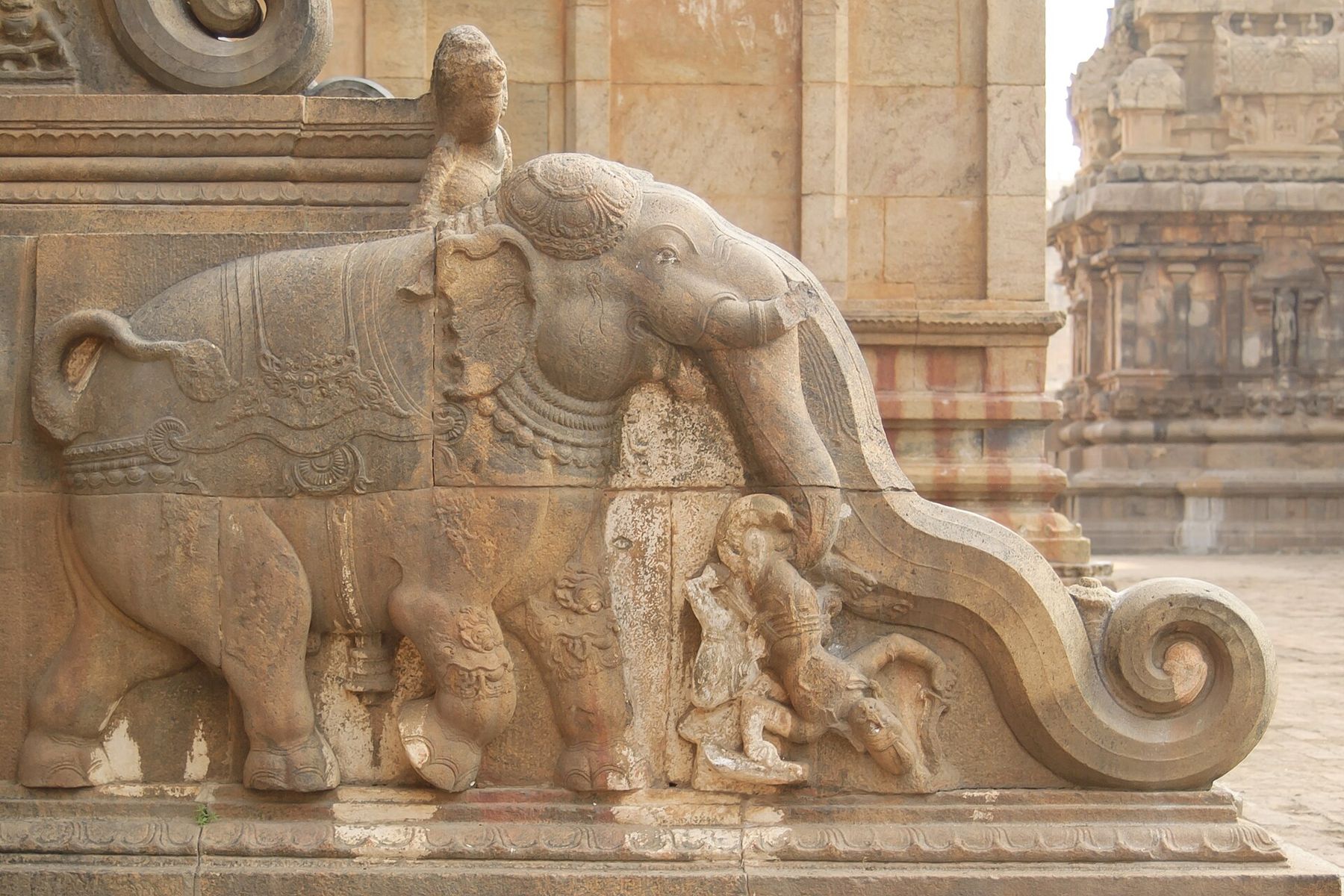
Walk slowly around the outside of the vimana. Its walls carry niches with large sculpted figures of Shiva in his different forms, guardians at the doorways and fine detail on the plinth. Look for small panels of animals and dancers: there is a whole vocabulary here, carved with a sureness that comes from long practice.
i
Matthew T Rader · CC BY-SA 4.0Inside the passage that runs around the sanctum, Chola-period murals survive under later Nayak paintings. They are among the most important early paintings in South India. This passage is not generally open to visitors, so do not expect to see them; photographs in books are the usual way in.
Months that suit the temple
The temple usually opens early in the morning, closes for a few hours around midday and reopens in the afternoon until evening. Check the hours locally. The courtyard stone gets very hot in the middle of the day, which is one reason to avoid noon. The other reason is the light: the tower faces east, and in the late afternoon and at dusk the granite turns a warm gold, while the sky behind darkens. Arrive an hour before sunset and stay until the lamps are lit.
Maha Shivaratri, usually in February or March, draws large crowds for night-long worship, and the temple is lit up. Other festival days bring processions and music. On any evening there is an easy rhythm of families, pilgrims and local walkers circling the courtyard.
A last tip: walk once around the outside of the enclosure wall, too. From the moat side and the lanes to the west, the tower rises over trees and rooftops, and you see it as people in the town have seen it for a thousand years, as part of the skyline rather than a monument behind a gate.
Thanjavur beyond the temple
The temple stands within the remains of a fort, with a moat and walls still traceable on its western and southern sides. A short distance away, the Thanjavur Palace complex, built largely under the Nayak and Maratha rulers who followed the Cholas, holds an art gallery with one of the finest collections of Chola bronzes anywhere. The bronzes are the other great Chola achievement: images of the gods cast in metal by the lost-wax method, many made to be carried in procession. Seeing them after the temple completes the picture of what this dynasty made.
The palace also contains the Saraswathi Mahal library, with a large collection of old manuscripts on palm leaf and paper. Parts of the complex are under restoration from time to time, so check what is open.
Thanjavur is also known for its distinctive painting style, with gold leaf and inset glass, and for bronze casting, which continues in workshops in the region. Look, admire, and buy only if you want to: nothing here depends on it.
In 2010 the temple marked a thousand years since its completion, with celebrations of dance and music in the courtyard, recalling the hundreds of dancers listed in its inscriptions. Classical dance performances are still held here on some festival evenings, under the floodlit tower. If one coincides with your visit, it is an memorable way to see the stone used as it was meant to be: as a stage for worship and art together.
Notes from the gate
- Shoes stay at the counter by the gate. Socks make the hot courtyard bearable.
- Photography in the courtyard has usually been allowed; inside the shrine it is not. Follow the signs.
- The inner sanctum, with its very large lingam, is open to worshippers; others may be asked to stay outside.
- Thanjavur makes a good base for the delta: Darasuram and Gangaikonda Cholapuram are within reach for a day, and Srirangam is about an hour away by road or rail.
For the route on from here, see linking the six towns. For the other two Chola temples in the UNESCO group, read Darasuram and Gangaikonda Cholapuram.